
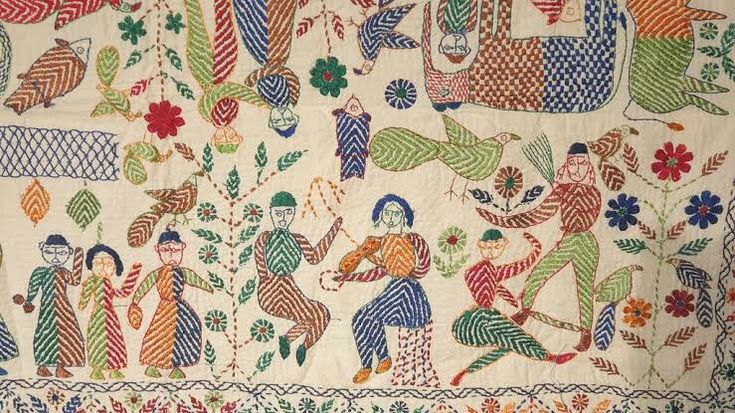
Each one of the handmade Bengal sari wears a tale in its stitching, stitch by stitch, hour by hour. The story starts with rural women artisans who have sustained the art of kantha stitch for ages and have transformed this simple running stitch into one of the most popular slow fashion traditions of India at The Nakshighaar. It’s not simply a matter of purchasing a saree; it’s about comprehending the importance of handmade textiles and why a specific craft from Bengal was officially acknowledged for its cultural worth.
The aim is to show in this case study how embroidery, called “Nakshi Kantha,” evolved from a basic household need to a Geographical Indication (GI) tagged art form and how it can be relevant for all who are interested in sustainable fashion today.
The making of a handmade Bengal Saree.
A handicrafted saree from Bengal is not made in an assembly line. It is created by hand stitching, which can take weeks to months, depending on the embroidery density. Unlike machine made fabrics, there are little irregularities, like the fingerprints of the woman artisan behind the needle, in each kantha stitch saree. There are no two identical pieces and that is what makes them different.
It’s all about the value of time, skill and intention over speed and mass production, the essence of slow fashion. If you opt for handmade over factory-made, you’re selecting a piece that’s intended to last a whole summer, rather than just a single season.
The origin of Kantha stitch–and its GI Tag
The roots of Kantha embroidery go back to rural Bengal where for a long time, women would patch old saris and dhotis together with the running stitch and would not throw away worn cloth. This work of art turned into a more elaborate craft over time and got embroidered from toe to top with motifs of birds, flowers and folk stories in between.
Nakshi Kantha was given the Geographical Indicator tag in 2007 (GI Number 49) for its cultural and artisanal importance. The Geographical Indication tag is meant to ensure the authenticity of the craft, and only embroidery actually produced by artisans from the Bengal region (mainly in the districts of Birbhum, Murshidabad, and Nadia) can be called Nakshi Kantha. It is a formal recognition that this kind of handcrafting tradition and the women artisans who uphold it are worth protecting in today’s times of mass replication and imitation.
In this craft, women artisans are the centerpiece; why?In this craft, why are women artisans at the heart of it?
Kantha stitch has always been the work of the Bengali women, handed down from mother to daughter in families. It continues to be a source of livelihood for women artisans in villages around Shantiniketan and others today who do so along with domestic work. By purchasing a handmade kantha sari, you are directly contributing to this skillful women’s economy, where numerous women don’t have any alternative means of formal job.
Here lies sustainable fashion and social impact. Each saree is handmade, generating income for rural communities – a skill that otherwise would be lost when faced with cheaper, factory-made options.
Handmade vs Machine Made: Case Study on Sustainable Fashion.
The beauty of slow fashion is that it is in contrast to the throwaway culture of fast fashion. If you want to duplicate a machine embroidered saree, it takes just a few minutes, but a true kantha stitch one won’t. There are several reasons why you should consider handmade items:
- Work that is more environmentally friendly — no industrial machines produced by the need for excess energy in hand stitching
- Extended life of the garment – Hand embroidery in handloom fabric is designed to last for decades!
- Ethical labour — fair compensation goes directly to individual women artisans, not to the factory intermediaries
Cultural preservation – every purchase keeps a GI tagged heritage craft alive for the future generations.
A handmade Bengal saree is not only an accessory but also a statement of conscious commitment to reject disposability for oneself, for his/her wardrobe.
The Nakshighaar’s Approach to Preserving the Craft, is a work of art.The Nakshighaar’s Approach to Preserving the Craft, is a work of art.
Each kantha stitch sari at The Nakshighaar is handmade by women artisans who are still engaged in this traditional hand stitching craft in its purity. Instead of watering down the craft for quicker production, efforts are made to maintain its density, rhythm and storytelling appeal, which is why it was recognized as a GI in the first place.
Conclusion
The handmade Bengal Saree, from resourceful household stitch to a GI tagged national treasure, is a case in point of what slow fashion can accomplish when it’s backed by craft, community and consumer values. When one wears a handmade kantha stitch saree, one is wearing sustainable fashion that respects the women artisans, protects the heritage and does not promote fast fashion. The Nakshighaar is a continuation of that tradition; stitch by stitch of a saree.
FAQs
Q: What is GI tag and how it is related to handmade sarees?
A: The GI (Geographical Indication) tag is a legal instrument to ensure that a product, such as Nakshi Kantha embroidery, is the genuine article from a given area and is embroidered in the traditional style; it keeps other artisans honest.
Q: Is kantha stitch only used on sarees?
A: No, kantha stitch is used on any kind of fabrics, not just on sarees.
Apart from sarees, kantha hand stitching can also be spotted on dupattas, kurtas, bags, home textiles and more.
Q: How to distinguish a good handmade kantha sari?
A: Check for small gaps in the stitches, natural variations in the thread, and transparency about sourcing – the real handmade products will not have machine-printed perfect stitches.
Q: Why is kantha stitch considered sustainable fashion?
A: Kantha stitch is sustainable fashion because it uses local yarns and dyes, which help to preserve the local economy and culture.
Because it is still emerging from old fabric and still uses manual, low-impact methods, as opposed to industrial methods.
Title Tag:
Handmade Bengal Saree & Kantha Stitch GI Tag | The Nakshighaar
Meta Description :
Explore the story of handmade Bengal Sarees with kantha stitch and their journey for a GI tag — a sustainable and slow fashion journey for the women artisans. Discover original artworks today.